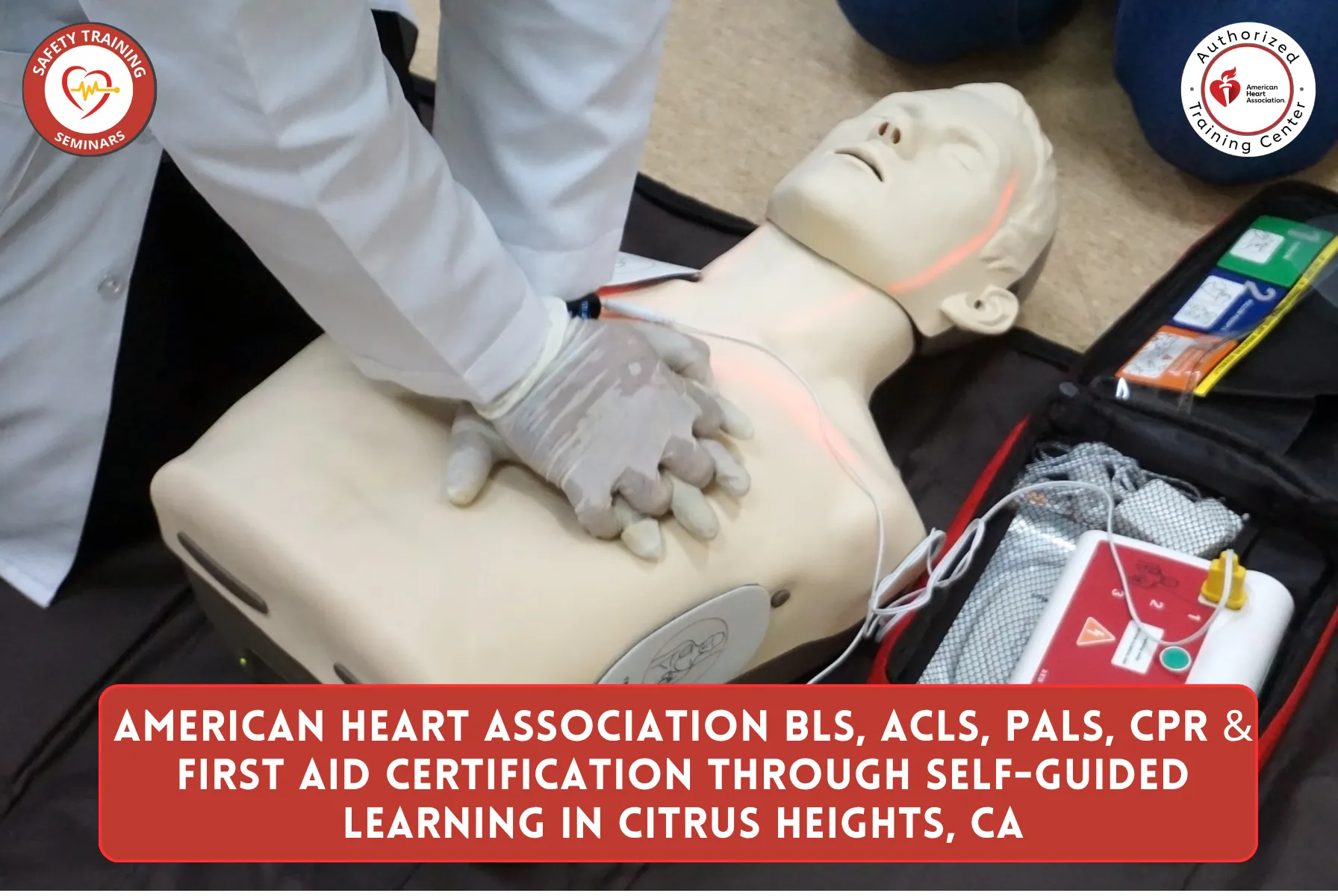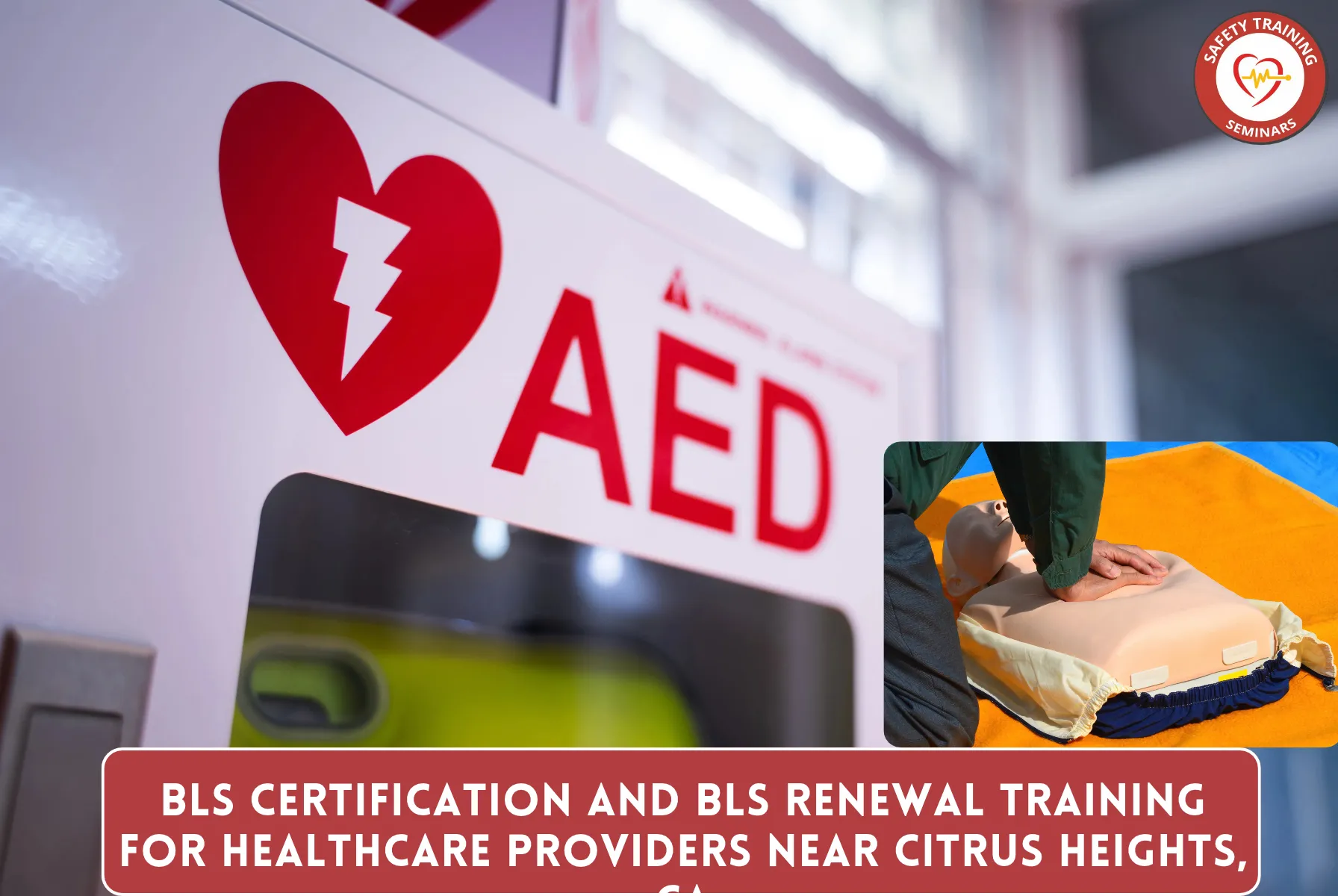
Much of the healthcare in Citrus Heights happens outside a hospital. On any given day, patients check in at multispecialty medical offices along Greenback Lane, recover from procedures at an outpatient surgery center, work through physical therapy, or live in a skilled nursing facility. If one of those patients goes into cardiac arrest, the first responders are not a hospital code team down the hall. They are the nurses, medical assistants, therapists, and physicians already in the room, and they act in the minutes before EMS arrives.
That is the practical reason Basic Life Support (BLS) training matters to so many local healthcare workers, and why BLS certification renewal keeps coming back on their calendars. This guide covers what BLS includes, how BLS skills apply in different Citrus Heights care settings, how an initial course differs from a renewal course, and where to find AHA BLS training close to home.
What Basic Life Support Covers for Healthcare Providers
The professional-level resuscitation training known as Basic Life Support is intended for those who work with patients. The 2025 AHA Guidelines for CPR and Emergency Cardiovascular Care are reflected in the current BLS Provider course, which the American Heart Association (AHA) considers as the cornerstone for saving lives following cardiac arrest.
The techniques a physician may need to do swiftly, precisely, and in tandem with other rescuers are the main focus of an AHA BLS course:
- Identifying life-threatening situations, such as cardiac arrest, and triggering the emergency response system
- Excellent CPR for adults, kids, and babies that pays close attention to chest recoil, depth, compression rate, and interruptions
- Using an automated external defibrillator (AED) as soon as possible
- Using a pocket mask and a bag-mask device for efficient ventilation
- Choking relief for both responsive and nonresponsive patients
- Team-based resuscitation and two-rescuer CPR, with defined roles and closed-loop communication
How BLS differs from general-public CPR
The AHA also offers Heartsaver courses, which are designed for the general public and for workers without clinical duties. BLS goes further. It is built around healthcare-provider responsibilities such as pulse checks, two-rescuer CPR, bag-mask ventilation, and coordinated team response.
That does not mean everyone should take BLS. A teacher, coach, or office worker is usually well served by a Heartsaver CPR AED course. The right choice depends on your job duties, your employer’s expectations, and the requirements of any educational program you are in. When in doubt, ask your employer or program which course name it requires before you register.
Why BLS Readiness Matters in Citrus Heights’ Outpatient-Heavy Care Landscape
There isn’t a sizable acute-care hospital in Citrus Heights. A large portion of the community’s outpatient care network has developed around Dignity Health’s Mercy San Juan Medical Center, which is located in Carmichael, just across the border. What makes BLS abilities so important in this area is the structure of the local healthcare system.
- Medical office buildings. Mercy Medical Group opened a three-story medical office building at 7115 Greenback Lane in 2019, with 126 exam rooms offering primary and specialty care. In a busy clinic, the people who respond to a collapse in a waiting room or exam room are often a medical assistant, a nurse, and a physician working together until paramedics arrive.
- Ambulatory surgery. The Citrus Heights Surgery Center, a 16,000-square-foot facility operated in affiliation with Dignity Health and United Surgical Partners International, opened in 2022 near Stock Ranch and Sylvan Road. It handles outpatient procedures in areas such as orthopedics, gastroenterology, and general surgery. In procedural settings, ventilation skills and smooth team coordination are directly relevant.
- Rehabilitation and therapy. Outpatient rehabilitation clinics, including Mercy Outpatient Rehabilitation Center on Greenback Lane, see patients who are exercising and recovering from illness or surgery. Therapists and aides benefit from knowing how to recognize an emergency and start CPR right away.
- Skilled nursing and post-acute care. Facilities such as Citrus Heights Post Acute on Uplands Way care for residents with complex, chronic conditions. Nursing staff in these settings may be the only clinicians on site when an emergency occurs.
The common thread is time. In each of these settings, what happens before EMS arrives depends on how well the on-site team can recognize cardiac arrest, start high-quality CPR, use an AED, and communicate as a unit.
Who commonly seeks BLS training locally
Professionals who often look for BLS courses include registered nurses and LVNs, medical assistants, CNAs, dental teams, surgical technologists, respiratory and rehabilitation therapists, EMTs, and physicians. Requirements differ by role and employer, so confirm what your workplace expects instead of assuming.
Initial BLS Course vs. BLS Renewal: Choosing the Right Path
One of the most common questions among local healthcare workers is whether they need a full course or a renewal course. The answer depends on your training history and on the rules of your training provider and employer.
| Initial BLS Provider Course | BLS Renewal Course | |
| Typical learner | New to BLS, a healthcare student, or someone whose previous card is no longer current | A healthcare professional who holds a current AHA BLS eCard |
| Focus | Building CPR, AED, ventilation, and team skills from the ground up | Reviewing and practicing skills, plus updates in resuscitation science |
| Eligibility | Generally open to anyone needing BLS | Set by the training center; usually requires proof of a current card |
| Outcome | AHA BLS Provider course completion eCard | AHA BLS Provider course completion eCard |
When to plan your BLS renewal
According to the AHA’s course card reference guide, AHA eCards are valid for two years through the end of the month in which they were issued. Start by checking the date on your current eCard. Then confirm two things: whether your employer wants you to renew before a certain point, and whether your training provider accepts you for a renewal course. The AHA itself directs learners with renewal questions to their training center, because renewal eligibility is handled at that level.
It is wise not to wait until the final week. A renewal course is also a chance to practice skills you may not use every day, especially infant CPR and bag-mask ventilation, and to catch up on changes introduced with the 2025 Guidelines.
A Note for Nursing and Allied Health Students
Many students from Citrus Heights and nearby neighborhoods study at American River College on College Oak Drive in Sacramento, which offers registered nursing, LVN-to-RN, certified nursing assistant, and paramedic programs. Nursing students there complete laboratory experience in local health agencies, and clinical programs like these commonly require students to hold current BLS course completion before patient contact.
If you are a student, check three details with your program before enrolling in a course:
- The exact course it requires, such as the AHA BLS Provider course rather than a general CPR course.
- Whether your eCard must remain current through the end of a semester or clinical rotation.
- The deadline for uploading your eCard to the program or clinical site.
Understanding AHA BLS Course Formats and Your eCard
The AHA offers BLS through a classroom option and a blended learning option. Blended learning pairs HeartCode® BLS, an online portion completed at your own pace, with a hands-on skills session. According to the AHA, all of its BLS course options teach the same science-based skills and lead to the same course completion card.
One point often causes confusion: finishing an online module alone does not produce a BLS card. The AHA states that learners must successfully complete both the HeartCode online course and the hands-on skills session to receive an AHA course completion eCard.
It also helps to understand what that eCard is. It is proof that you completed an AHA course. It is not a professional license, and it does not replace any licensing requirement set by a state board. Each eCard carries a code that employers can use to check that it is valid.
BLS Training at Safety Training Seminars in Citrus Heights
For healthcare professionals who prefer to train locally, Safety Training Seminars operates a training center inside Citrus Heights at 7625 Sunrise Blvd, Suite 209, Citrus Heights, CA 95610. The classroom is in Building 7625 toward the rear of the complex, on the second floor, and SacRT bus stops on Sunrise Boulevard are within a short walk.
Safety Training Seminars offers American Heart Association courses, including BLS for healthcare providers, along with ACLS, PALS, CPR, and First Aid. The company is listed as an AHA Self-Guided Learning™ authorized distributor. Depending on the course you choose, available formats may include HeartCode® Complete paired with a hands-on skills check at a CPR Verification Station™. Because formats can differ between initial and renewal courses, review the course page to confirm which option fits your situation.
You can compare current options for initial training and BLS renewal classes in Citrus Heights on the course page, which lists up-to-date details on course types, availability, and registration. Before booking, make sure the course matches what your employer or school requires.
Frequently Asked Questions
Where can healthcare providers find BLS classes near Citrus Heights, CA?
Safety Training Seminars has a training center within the city at 7625 Sunrise Blvd, Suite 209. Current course types, dates, and registration are listed on the Citrus Heights BLS course page.
How long is an AHA BLS eCard valid?
The AHA states that its eCards are valid for two years through the end of the month in which they were issued. Your employer or school may set its own timing rules, so check with them too.
Can I take a renewal course if my BLS card has already expired?
That depends on the training center’s renewal policy and on your employer’s expectations. Contact the training provider before registering. If you are not eligible for renewal, the initial BLS Provider course is the usual path.
Do outpatient clinic or dental staff need BLS, or is general CPR enough?
It depends on your role, your employer’s policies, and any requirements from your licensing board. Many patient-facing clinical roles call for BLS, while some non-clinical staff may only need a Heartsaver course. Confirm with your employer before choosing.
Will my employer accept an AHA BLS eCard?
The AHA describes its eCards as valid proof of course completion that can be shown to employers. Acceptance is still up to each employer or institution, so confirm that it requires the AHA BLS Provider course.
Keep Your BLS Skills Ready for the Moments That Count
In a community where so much care happens in clinics, surgery centers, therapy gyms, and skilled nursing facilities, the team in the room is often the team that responds. Staying current with BLS means you can recognize cardiac arrest, deliver high-quality CPR, use an AED, and work with your colleagues when it matters most.
If your eCard is nearing its expiration date, or you are preparing for your first clinical role, review the AHA BLS courses near Citrus Heights offered by Safety Training Seminars, confirm your employer’s or program’s requirements, and choose the course that fits your next step.